

Physical therapists empower people to regain movement, build strength, restore function, and participate more fully in everyday life. Whether supporting recovery after injury, improving mobility after surgery, helping manage chronic conditions, or promoting balance and endurance across the lifespan, physical therapy is deeply connected to helping people move through the world with greater confidence and independence.
Therapeutic horticulture (TH) aligns naturally with those goals.
At GrowTH, we often hear from physical therapists looking for engaging, adaptable ways to support rehabilitation and encourage sustained participation in therapy. Many already recognize that movement can become more meaningful when it is connected to real-life activity rather than isolated exercise alone. Therapeutic horticulture offers another way to approach that work through purposeful, plant- and nature-based activity.
This article is part of our series exploring how therapeutic horticulture can complement allied health practice.
Table of Contents
For physical therapists, gardening tasks like watering, transplanting and raised-bed work offer purposeful ways to work on reaching, balance, grip, standing tolerance and endurance. The same activity can be graded by body position, tools, work-surface height, duration, resistance and level of assistance. Physical therapy skills transfer well, but TH also requires knowledge of plant safety, horticulture and facilitation, and you don’t need a dedicated garden to start.
What Is Therapeutic Horticulture?
Therapeutic horticulture (TH) is participation in plant, gardening and nature-based activities facilitated by a trained professional to support health, wellbeing, participation and other identified goals.
What distinguishes TH from general gardening is intention. Activities are thoughtfully selected, adapted, and facilitated according to the participant, setting and intended purpose. In rehabilitation, that may include goals related to physical function, cognition, confidence, social participation, endurance or routine-building.
For physical therapists, therapeutic horticulture can provide a practical medium through which movement and participation are practiced within purposeful, real-world activity.
How Gardening Builds Functional Movement in Rehabilitation
Many horticulture tasks naturally involve movement patterns that physical therapists already address in rehabilitation. Depending on the activity and environment, participants may practice:
- Reaching and grasping
- Weight shifting and dynamic balance
- Squatting, kneeling and rising
- Upper-extremity range of motion
- Fine-motor control and grip strength
- Bilateral coordination and postural control
- Standing tolerance and endurance through sustained activity
The difference is that these movements occur within a task that has an immediate purpose. Watering plants, transplanting seedlings, moving containers, pruning stems or working at a raised bed can all create opportunities for physical engagement while the participant is focused on doing something meaningful.
Consider a participant working on standing tolerance after a period of reduced mobility. At a raised bed, watering and tending herbs may involve reaching, weight shifting, grip, postural control and sustained standing. The physical demands are real, but the task also has a visible purpose: the herbs need care. The practitioner can adjust the height of the work surface, the weight of the watering can, the reach distance, the time on task and the level of support to match the participant’s goals.
For some people, attaching movement to a purposeful task may also make participation feel less repetitive or clinical. The activity does not replace rehabilitation goals; it becomes one way of working toward them.
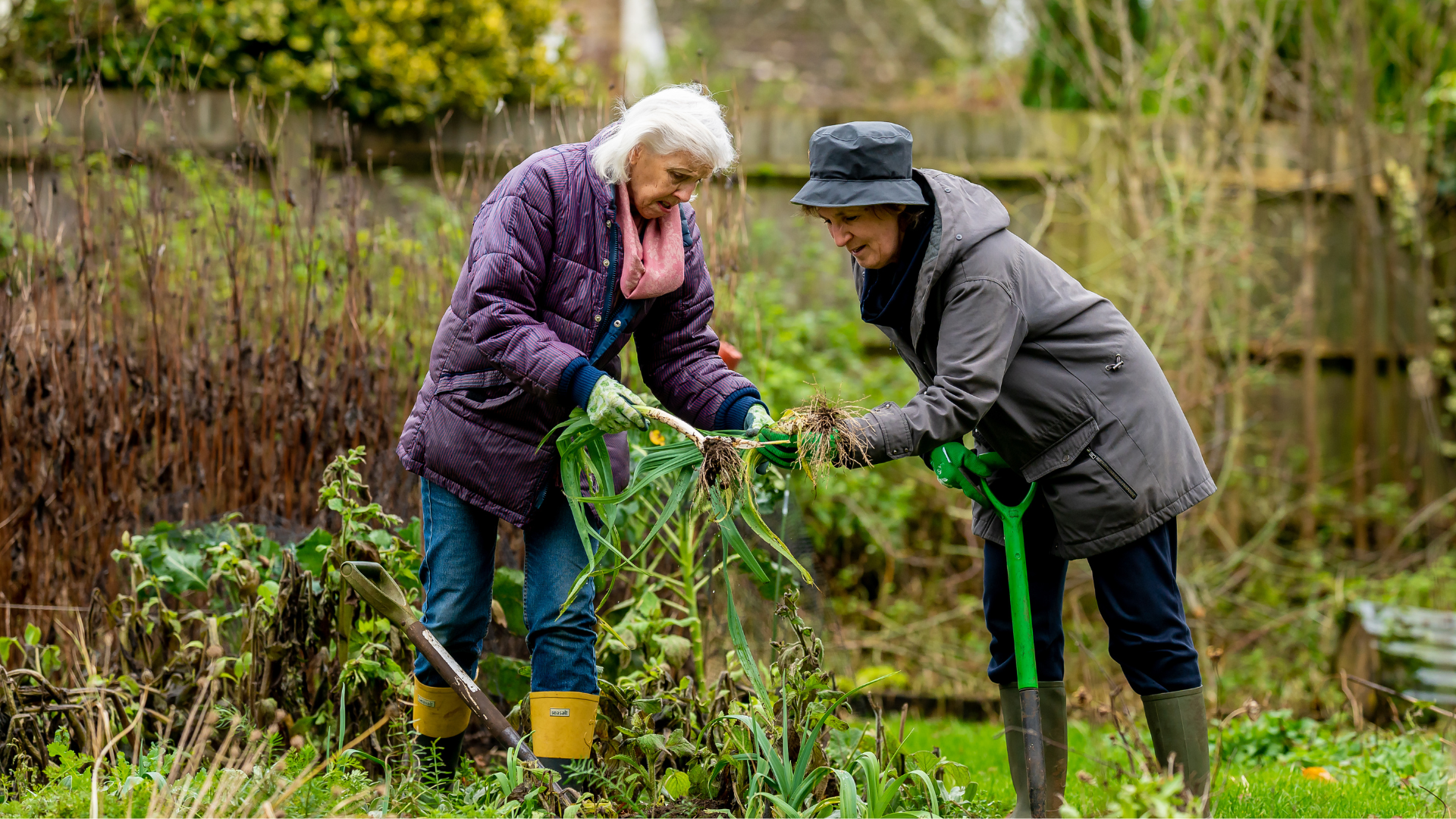
Making Rehabilitation Feel Less Clinical With Plants and Nature
Rehabilitation can be physically and emotionally demanding, particularly when progress is slow or exercises become repetitive. Plant- and nature-based activities can introduce sensory engagement, visible progress and a tangible result into that experience.
Rather than focusing only on impairment, a participant may also be growing herbs, tending flowers, harvesting vegetables or caring for something living. That shift in attention can create opportunities for accomplishment, responsibility and engagement alongside the physical work.
Therapeutic horticulture does not replace traditional rehabilitation approaches. It offers another context in which rehabilitation goals can be practiced.
How to Grade and Adapt Gardening Activities for Physical Therapy
One of the clearest overlaps between physical therapy and therapeutic horticulture is the ability to grade and adapt an activity. The same gardening task can be modified through:
- Body position (standing, seated or supported)
- Tool selection
- Height of the work surface
- Duration of the activity
- Resistance or weight
- Reach distance
- Task complexity
- Environmental setup
- Amount of assistance provided
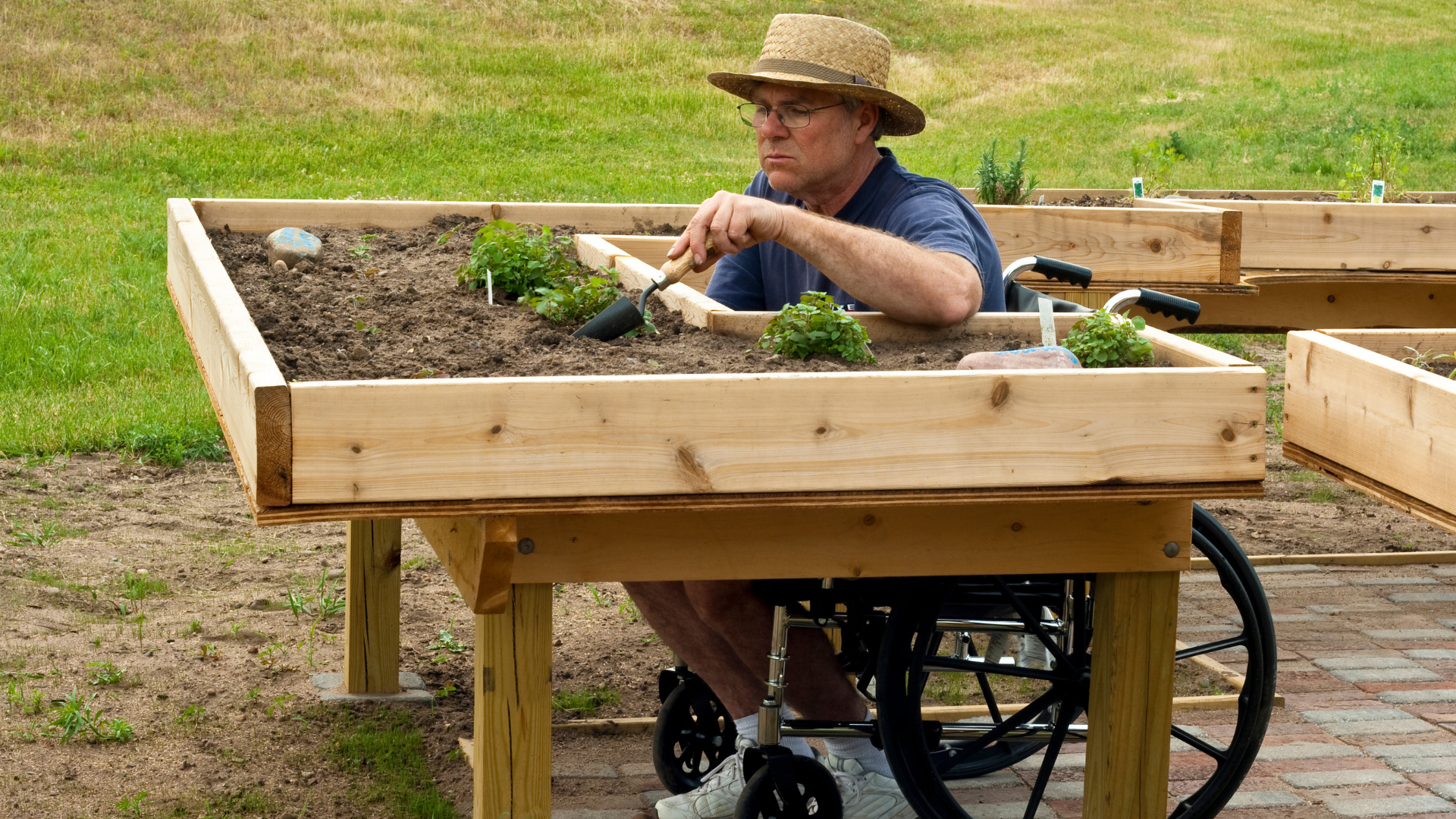
Raised beds, for example, can be positioned at different heights to support body mechanics and reach. Roll-under beds can allow seated participation from a more neutral position. Adaptive tools can reduce grip demands, extend reach or distribute force across larger muscle groups.
The same principle applies to indoor and outdoor activities. An outdoor task might incorporate walking, carrying materials or navigating varied surfaces, while an indoor propagation activity might emphasize seated posture, hand function, upper-extremity movement or bilateral coordination. The activity can be adjusted to the participant rather than expecting the participant to fit the activity.
Designing Accessible Therapeutic Garden Spaces
Physical therapists already understand how strongly the environment can influence movement and participation. In therapeutic horticulture, the environment is part of the planning rather than simply the backdrop.
Thoughtfully designed spaces may include:
- Raised beds with accessible reach zones
- Stable seating and kneeling supports
- Wide, navigable pathways
- Adaptive tools
- Options for standing or seated participation
- Sensory features or quieter areas that support different participation needs
Even without a dedicated therapeutic garden, practitioners can think intentionally about height, reach, surfaces, seating, lighting, sensory input and the amount of space needed for safe participation.
Therapeutic Horticulture for Group Rehabilitation
Therapeutic horticulture can also support group rehabilitation. Shared gardening tasks can create natural opportunities for collaboration, peer encouragement, conversation, leadership and social participation while people are engaged in a common activity.
For individuals recovering from injury, illness or periods of isolation, that social dimension can help connect rehabilitation goals with everyday participation and community life.
Transferable Physical Therapy Skills for Therapeutic Horticulture
Physical therapists bring many capabilities that can transfer well into therapeutic horticulture practice. Those skills provide a strong foundation, but they do not replace therapeutic horticulture-specific knowledge.
Plant selection and safety, horticultural practice, facilitation, accessibility, participant-centred planning and the therapeutic use of plant- and nature-based experiences all require their own consideration.
For many physical therapists, the opportunity is not to leave rehabilitation reasoning behind, but to apply it within a different therapeutic medium while building the additional knowledge needed to do so thoughtfully.
How Physical Therapists Can Start Using Therapeutic Horticulture
You do not need a large garden or dedicated therapeutic horticulture space to begin exploring how plant- and nature-based experiences could fit within rehabilitation practice.
Depending on the participant, goals and setting, activities might include:
| Activity | Rehabilitation focus |
|---|---|
Seated herb planting |
Upper-extremity engagement |
Watering tasks |
Standing tolerance and mobility |
Container gardening |
Balance and reaching |
Propagation activities |
Fine-motor coordination |
Raised-bed gardening |
Functional movement practice |
Group planting activities |
Movement and participation combined |
The activity itself is only one part of therapeutic horticulture. Purpose, participant needs, adaptation, safety, facilitation and the practitioner’s knowledge all shape how an experience is planned and used.
Not Sure of Your Next Step?
If you are interested in bringing therapeutic horticulture into your work but are not yet sure how to move from interest to thoughtful practice, our free How to Bring Nature & Gardening Into Your Work Guide & Toolkit can help.
The Toolkit includes a practical 7-step guide, evidence summaries, decision-maker talking points, a customizable therapeutic horticulture information sheet, and editable templates to help you consider your role, identify where TH may fit, build support and determine what knowledge or training you may need.
Final Thoughts
Physical therapy is not only about restoring movement. It is also about helping people participate more fully in the activities and experiences that matter to them.
Therapeutic horticulture can offer another setting for that work: one where reaching, standing, coordination, endurance and other functional skills are connected with caring for plants, completing purposeful tasks and engaging with the natural world.
For physical therapists interested in this area, the starting point is not simply choosing a gardening activity. It is considering the person, the purpose, the environment and how plants and nature might meaningfully support the work already underway.
Frequently Asked Questions
What is therapeutic horticulture?
Therapeutic horticulture (TH) is participation in plant, gardening and nature-based activities facilitated by a trained professional to support health, wellbeing, participation and other identified goals.
How is therapeutic horticulture different from gardening?
The difference is intention. In TH, activities are selected, adapted and facilitated according to the participant, the setting and the intended purpose.
How can therapeutic horticulture support physical therapy?
Gardening tasks involve movement patterns physical therapists already address, such as reaching and grasping, weight shifting, squatting and rising, grip strength and standing tolerance. In TH, those movements happen within a task that has an immediate purpose.
Does therapeutic horticulture replace physical therapy?
No. Therapeutic horticulture does not replace traditional rehabilitation approaches. It offers another context in which rehabilitation goals can be practiced.
How can gardening activities be adapted for different abilities?
Practitioners can adjust body position, tools, work-surface height, duration, resistance, reach distance, task complexity, environmental setup and the amount of assistance. Raised beds, roll-under beds and adaptive tools all help match the activity to the participant.
Do I need a garden to use therapeutic horticulture in physical therapy?
No. Seated herb planting, container gardening and indoor propagation activities can all work without a dedicated therapeutic garden.
Do physical therapists need additional training to use therapeutic horticulture?
Physical therapy skills provide a strong foundation, but plant selection and safety, horticultural practice, facilitation and participant-centred planning require their own knowledge. GrowTH’s free Guide & Toolkit can help you identify what training you may need.