

Therapeutic Horticulture Training for Students
Equip Your Students With Valuable TH Skills
GrowTH partners with universities and colleges to bring practical, evidence-informed education in garden-based activities and therapeutic horticulture to allied health programs.
Our courses help students develop the knowledge and skills to incorporate plants and nature into their professional work, with training options suited to different learning objectives.

How it Works
Choose from four-hour or 12-hour self-paced online courses that can be integrated into existing coursework or completed independently.
The four-hour Garden Activities course prepares students to confidently facilitate meaningful, garden-based activities, while the 12-hour Therapeutic Horticulture course provides more comprehensive training to prepare students to incorporate therapeutic horticulture into their professional practice.
Both courses award students a Therapeutic Horticulture Ally Certificate and digital badge.
How We Equip Your Students

Provide training in therapeutic horticulture through our virtual, self-paced courses

Teach students how to connect people with plants and nature indoors or outdoors
Provide a Therapeutic Horticulture Ally certificate and digital badge to add to their resume

If desired, provide ongoing resources, activities & support
Program Details
Training Through the Intro to Therapeutic Horticulture Course
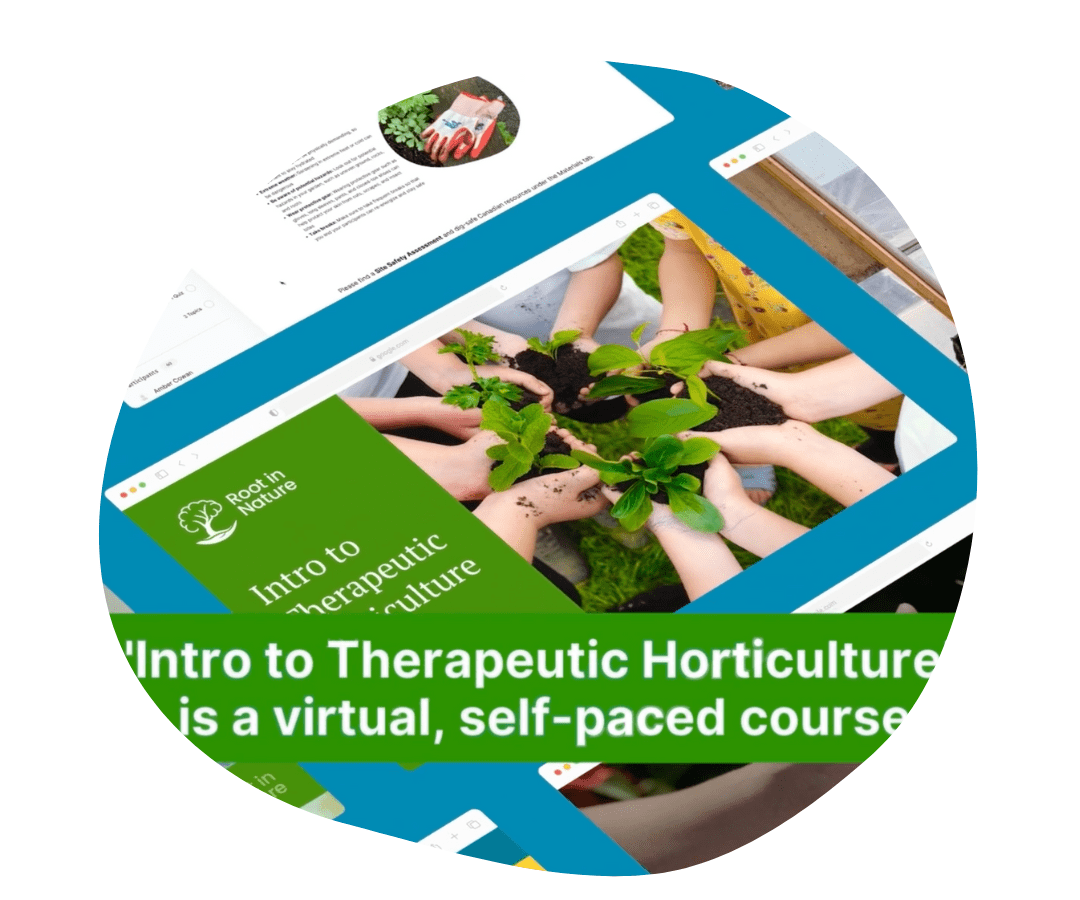
This virtual, self-paced course teaches how to facilitate, adapt and evaluate therapeutic horticulture sessions while providing foundational horticulture and safety training. Students will finish this course with the skills to facilitate activities with individual clients and small groups.

Course Details
- CE Credits with NCTRC for 8 hours
- Completed in 4 -8 hours
- Primarily video content
- 5 Modules & Quizzes
- 63 Topics
- Course Manual
- Therapeutic Horticulture Ally Certificate
- Digital Badge
Optional Continuation for Students: The GrowTH Network
GrowTH – Grow Therapeutic Horticulture is professional growth and resource platform for therapeutic horticulture practitioners and course graduates. This is an international and interdisciplinary space for those practicing therapeutic horticulture.


Resources & Support
- 12 Session Plans
- Sortable Activity Database with 150+ step-by-step activities
- Expert-led monthly support calls
- Free ongoing professional development events
- A Resource Library, including:
- Intake & Evaluation Forms
- Visual cues
- Sensory Plant Lists
- Assessment form templates
Benefits for Educational Institutions

Enhanced Curriculum Appeal
Incorporating industry-leading therapeutic horticulture training into the curriculum can attract prospective students interested in cutting-edge therapeutic practices, distinguishing the program from competitors.

Improved Employment Outcomes for Graduates
Graduates who have received therapeutic horticulture training are equipped with specialized skills that position them to stand out from their peers in competitive fields.

Innovative Teaching Methods
Integrating therapeutic horticulture into the curriculum introduces students to innovative and practical teaching methods, providing hands-on learning experiences that are likely to enhance student engagement and retention of material.

Leadership in Educational Trends
Adopting therapeutic horticulture training positions the institution as a leader in recreational therapy education, keeping pace with or even setting new trends in therapeutic practices.

Partnership and Networking Opportunities
Collaborating with GrowTH for therapeutic horticulture training opens up avenues for networking with professionals and organizations in the field, potentially leading to guest lectures, internships, and job placements for students.

Positive Impact on Student Wellness
Offering therapeutic horticulture as part of the curriculum not only educates students but can also positively affect their mental and emotional well-being, promoting a healthier learning environment.
Enhanced Curriculum Appeal
Incorporating industry-leading therapeutic horticulture training into the curriculum can attract prospective students interested in cutting-edge therapeutic practices, distinguishing the program from competitors.
Increased Enrollment
Offering specialized training like therapeutic horticulture can draw more students to the program, interested in acquiring unique and employable skills.
Improved Employment Outcomes for Graduates
Equipping students with a specialized skill set in therapeutic horticulture prepares them for a broader range of employment opportunities post-graduation, enhancing the program’s reputation for successful job placements.
Partnership and Networking Opportunities
Collaborating with GrowTH for therapeutic horticulture training opens up avenues for networking with professionals and organizations in the field, potentially leading to guest lectures, internships, and job placements for students.
Innovative Teaching Methods
Integrating therapeutic horticulture into the curriculum introduces students to innovative and practical teaching methods, providing hands-on learning experiences that are likely to enhance student engagement and retention of material.
Leadership in Educational Trends
Adopting therapeutic horticulture training positions the institution as a leader in recreational therapy education, keeping pace with or even setting new trends in therapeutic practices.
Positive Impact on Student Wellness
Offering therapeutic horticulture as part of the curriculum not only educates students but can also positively affect their mental and emotional well-being, promoting a healthier learning environment.
Community Engagement Opportunities
Therapeutic horticulture projects can serve as a bridge to the wider community, offering students real-world experience while also contributing positively to local communities through service learning projects.
Research and Development
Incorporating therapeutic horticulture opens new avenues for research in recreational therapy, allowing faculty and students to explore and contribute to the growing body of knowledge in this field.
Strengthened Alumni Network
Graduates with unique skills in therapeutic horticulture may achieve notable success in their careers, strengthening the institution’s alumni network and contributing to its prestige.


Feedback from Course Students

Best Ottawa Business (BOBS) Award Winner
Root in Nature was recognized for Best Performance in Social Entrepreneurship by the Ottawa Board of Trade and the Ottawa Business Journal.

Coralus Venture
Root in Nature is grateful to be selected as one of the Ventures working on the World’s To-Do List by Coralus Activators. We receive interest-free funding, connections and relationships to grow our impact.

Best Ottawa Business (BOBS) Award Winner
Root in Nature was recognized for Best Performance in Social Entrepreneurship by the Ottawa Board of Trade and the Ottawa Business Journal.
Coralus Venture
Root in Nature is grateful to be selected as one of the Ventures working on the World’s To-Do List by Coralus Activators. We receive interest-free funding, connections and relationships to grow our impact.